

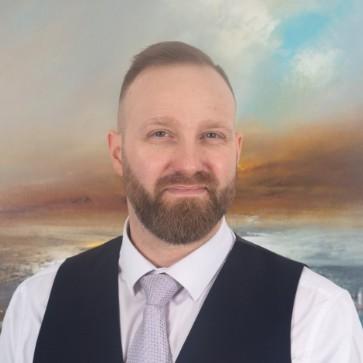
Daniel Thomas-Wallis
Surrey,Halton
Summary
CEO and Director of Thrive Together Psychotherapy, specialising in mental health and relationship support for individuals and couples. Expertise in crisis intervention and development of structured, high-standard therapeutic services. Responsible for in-house training and integration of depth psychotherapy with accessible care pathways. Proven leadership in enhancing therapeutic practices and client outcomes.
Overview
2026
2026
years of professional experience
3
3
years of post-secondary education
Work history
Existential Analytic Psychotherapist
Self Employed
Walton-On-Thames, Surrey
Jan 2016 - Current
private long-term counselling and psychotherapy for individuals and couples facing depression, anxiety, trauma, and relationship difficulties
Counsellor
DHC Talking Therapies IAPT
Dorking , Surrey
Jan 2018 - 2021.06
Manage a case load of 50 Individual counselling clients providing treatment for moderate to severe depression and anxiety.
Psychologist Assistant
Crisis Resolution And Home Treatment Team (CRHT NHS)
Bracknell , Berkshire
Apr 2017 - Jan 2018
Review, develop and implement a psychological treatment plan for psychiatric patients in crisis
Rehabilitation Worker
Brain Injury Services
Farnbrough , Hampshire
Aug 2015 - Apr 2017
Providing emotional and physical support for an individual who has a brain injury
Volunteer Counsellor
Faces In Focus
Elephant And Castle , London
Oct 2013 - Apr 2017
Counselling for children and young adults with depression and anxiety
Volunteer Counsellor
Couplestone Centre
Peckham , London
Mar 2013 - Apr 2017
Counselling for adults with depression, anxiety and mental health difficulties
Youth Worker
Mulberry House Residential Home
Tulse Hill , London
Feb 2013 - Aug 2015
Providing emotional and physical support for looked after children who are gang affiliated and have emotional difficulties.
Recruitment Consultant
Best Conections
Maidstone , Kent
Sep 2012 - Feb 2013
Answer phones, generate new business, conduct interviews, manage staff pay roll, out of hours on call service and ensure all clients have the temporary staff they require.
Care Worker/ Team Leader
Community Nursing & Care Agency CNCA
Ashford , Kent
Jan 2008 - Sep 2012
assisting adults and children with challenging behaviour, learning, physical and mental health disabilities involving all aspects of daily care and community support.
Care Worker:
Guided Tour
New Jersey , America
Aug 2006 - Jan 2008
Providing emotional and physical support for adults with learning, physical and mental health difficulties.
Care Worker/ Senior
Cumbria House Residential Home
Folkestone , Kent
Nov 2003 - Aug 2006
Managed a small team of staff who provide personal care for the elderly and infirm.
Trainee/Hair Stylist
Diva Hair Design
Hythe , Kent
Jul 2000 - Nov 2003
Cutting, style and colouring client's hair.
Education
Diploma of Higher Education - Psychosexual and Relationships Therapy
Diploma in Psychosexual and Relationships Therapy
London 2023.06 - 2025.06
Foundation Certificate - Group Psychotherapy
The Institute of Group Analysis
Bedford 2019.09 - 2020.09
M.Sc. - Counselling And Psychotherapy
University Of Roehampton
Roehampton 2016
Bachelor of Science - Psychology And Applied Criminology
Canterbury Christchurch University
Canterbury 2011
Access To Higher Education - Psychology And Sociology
University Of Kent
Canterbury 2006
NVQ Level 2&3 - Care
South Kent College
Folkestone 2005
NVQ Level 2 - Hairdressing
Keith Graham Academy
Folkestone 2002
Research
MSc Qualitative Research Project
"Exploring the Notion of Self-Sacrifice in Psychotherapy: a Case Study”.
Sacrifice was recognised as being entwined in a religious practice that can transform the idea of self-harm and suicide into a positive moral experience identified as an economic exchange. Using a case study method developed by Greenwood & Loewenthal, clinical and supervision case notes were subjected to hermeneutic-phenomenological analysis. This was grounded in an epistemology of “Idealism,” in which scientific knowledge is believed to be constructed from a researcher's conscious experience of the world (Greenwood and Loewenthal 2008). This research aimed to describe a client-therapist interaction to explore possible understandings of the notion of self-sacrifice in psychotherapy. The therapist categorised findings under the following headings: “Splitting of the good and bad object”, “The Scapegoat”, “Moral Masochism as Self-Sacrifice” and “The Wounded Healer”. The findings of this study suggest that, for this client, the notion of self-sacrifice is grounded in a traumatic, painful loss that led to self-blame, self-reproach, and self-punishment, attempts to prevent re-experiencing grief. The suggestion here was that the client's notion of self-sacrifice is an unspoken attempt at self-salvation in disguise.
BSc Quantitative Research Project
“The Face of Conflict: The Effects of Focus and 'Just World Beliefs' on Anger and Blame in a Simulated Conflict Situation”.
This experimental study explored the idea that reducing blame and anger is possible by focusing on the conflict issues. It also sought to establish how an individual's perception of justice may contribute to heightened anger and blame during conflict. This study hypothesised that Issues-focused conflict with low just world beliefs would demonstrate lower levels of blame and anger than person-focused conflict with high levels of just world
beliefs. Participants were exposed to a conflict situation via the social networking site Windows Live Messenger and asked to either focus on the person or the issues. Participants' facial expressions were recorded during this interaction and analysed using Ekman & Friesen's 1978 Facial Action Coding System (FACS). Questionnaire data were collected post-conflict to assess levels of blame and anger. The Just World Hypothesis scale was re-coded using a media split to identify participants with high and low levels of beliefs in the Just World. Results supported the hypothesis that low-level beliefs in a just world are associated with lower levels of anger, suggesting that when an individual believes they are being mistreated, they devalue the opponent's attractivenessand consider angry retaliationjustified.
Timeline
Diploma of Higher Education - Psychosexual and Relationships Therapy
Diploma in Psychosexual and Relationships Therapy
2023.06 - 2025.06
Foundation Certificate - Group Psychotherapy
The Institute of Group Analysis
2019.09 - 2020.09
M.Sc. - Counselling And Psychotherapy
University Of Roehampton
Bachelor of Science - Psychology And Applied Criminology
Canterbury Christchurch University
Access To Higher Education - Psychology And Sociology
University Of Kent
NVQ Level 2&3 - Care
South Kent College
NVQ Level 2 - Hairdressing
Keith Graham Academy
Existential Analytic Psychotherapist
Self Employed
Jan 2016 - Current
Counsellor
DHC Talking Therapies IAPT
Jan 2018 - 2021.06
Psychologist Assistant
Crisis Resolution And Home Treatment Team (CRHT NHS)
Apr 2017 - Jan 2018
Rehabilitation Worker
Brain Injury Services
Aug 2015 - Apr 2017
Volunteer Counsellor
Faces In Focus
Oct 2013 - Apr 2017
Volunteer Counsellor
Couplestone Centre
Mar 2013 - Apr 2017
Youth Worker
Mulberry House Residential Home
Feb 2013 - Aug 2015
Recruitment Consultant
Best Conections
Sep 2012 - Feb 2013
Care Worker/ Team Leader
Community Nursing & Care Agency CNCA
Jan 2008 - Sep 2012
Care Worker:
Guided Tour
Aug 2006 - Jan 2008
Care Worker/ Senior
Cumbria House Residential Home
Nov 2003 - Aug 2006
Trainee/Hair Stylist
Diva Hair Design
Jul 2000 - Nov 2003